



The story behind a cup of specialty coffee: a walk through the coffee plantations of the Dominican Republic
IKER MORÁN 01.04.2019 – 06:35H
- What are the differences between natural, roasted and blended coffee?
- Café Gibraltar or how they changed the name of the cortado.

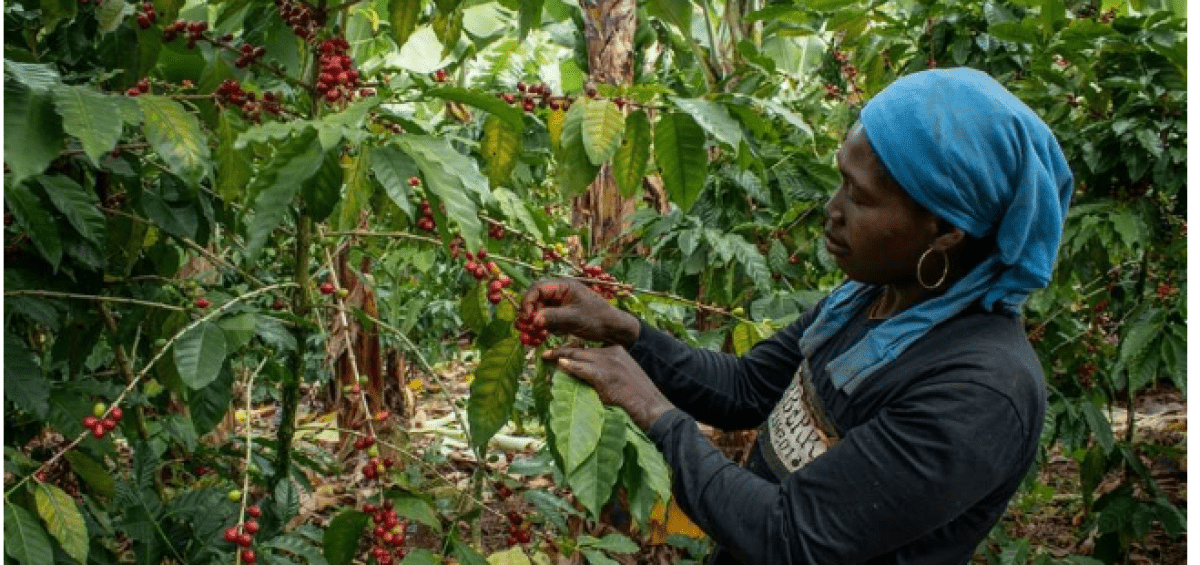
A worker picks coffee in the Dominican Republic. IKER MORÁN
For most people, it is a morning ritual. Either a cup of coffee that is more or less good or expensive at the local coffee shop or at that new specialty coffee shop where they take care of the details and the bill multiplies. But behind this daily gesture is one of the most consumed drinks in the world, an economic engine for many countries and a bean whose price is quoted on the New York futures exchange.
But all that seems a long way away as we watch Josefa, a Haitian worker, pick coffee on the plantations of the Spanish company behind the Café Crem brand, in the Barahona province of the Dominican Republic. Tourist resorts and beaches packed with tourists are a few hundred kilometres away, but millions of kilometres away economically speaking.

She has become the company’s best picker and today she will earn about 24 dollars for the 12 cans – each weighing about 20 kilos – that she will collect throughout the day. They charge 100 pesos per can collected, but in case the day goes badly the company guarantees a minimum of 200 pesos to the workers who, during the season, work in the company’s different plantations.
Some are owned, others are rented, but all have one common characteristic: their almost wild appearance, integrated into the spectacular nature of this area. It is part of the bet on specialty coffee, where quality takes precedence over quantity. In the case of more commercial coffee plantations, the usual thing is to destroy the field, plant from scratch and make it much more technical.

Production is three times lower, but the cost is three times higher, says César Ros, the company manager who follows the day-to-day operations of each farm, from sowing to harvesting and tasting the grains. Production is three times lower, but the cost is three times higher, says César Ros, the company manager who follows the day-to-day operations of each farm, from sowing to harvesting and tasting the grains. around this product.

“Everyone wins”
At the end of the day (from 7 a.m. to 2 p.m., 6 days a week), a sample of 50 beans is selected from each can, and if there are less than 5 defects (such as green beans), they are put into the bag. A process as artisanal and manual as the one that will be repeated in many of the steps that end with the bags of coffee on a ship bound for Spain or other markets where it is exported.

“Coffee is a democratic product, everyone benefits, from the person who picks it to the person who sells it,” says Benjamin Toral, a coffee grower and expert engineer in coffee. As newcomers, it is impossible not to think about the difference in this distribution between Josefa and those who roast it, sell it, or the establishments where it is served.
We also spoke about the local wealth that coffee brings with it with Danylsa Cuevas, the mayor of Polo, a town at the epicentre of this Dominican coffee renaissance. There are no concrete figures on the percentage of GDP that the crop represented years ago, but she knows better than anyone that the abandonment of coffee plantations after the rust plague some 20 years ago led to a decline in the population.

Now, the country that went from being an exporter to having to import coffee from Brazil or Vietnam, has a plan to recover crops and an ambitious-sounding goal: from the modest 100 or 200,000 kilos per year, the aim is to increase to 60 million kilos. Problems? Many, starting with the lack of generational change in a profession where the average age is almost 60 years.
Honeyed Method
“I hope it rains coffee in the fields,” sing the children of a small school near the La Lanza farm to welcome the Spanish visitors who then remember that Juan Luis Guerra is, indeed, Dominican. And that, for now, coffee is not raining.
The company collaborates in some of the infrastructures of the humble public schools spread throughout the area and where the children of many of the harvesters and workers at the factory where the grain is processed are educated – it is a mandatory requirement to work for the company, we are told.

Coffee quality is a complex issue, which depends on too many variables. From the variety, to the growing conditions, the time of harvest and, of course, the treatment of the bean before roasting.
The house brand is the so-called sumerHoney process, a variant of the wet processing system that immerses the grains in water for fermentation, allowing for better extraction of all the nuances and aromas of the mucilage, the flesh inside the berry.

Afterwards, the coffee is pulped and goes through the drying process. The beans still need to be husked to remove the parchment, and a final manual screening process will remove the imperfect beans. This work is carried out mostly by women and is once again surprising due to the artisanal nature of the process, although the traceability of each batch is more than assured.
Honeyed coffee is a much more complex and longer process than the traditional one, with an average duration of 40 days compared to the 8 or 9 days that commercial coffee usually needs to be processed and dried.. The objective is almost the opposite of other methods that seek to remove the honey from the grain, whereas here what is wanted is to preserve its nuances.

¿And is it noticeable? We tasted it right there following Ros’s instructions, who guided us through this complex world for beginners. The caramel notes of the honeyed coffee are, possibly, the most distinctive feature of a coffee that is making its way into the booming world of specialty coffee.
Meanwhile, the Dominican Republic is seeking to regain its place in the global coffee market, and in Barahona there is already talk of a designation of origin of its own to reinforce the image of quality coffee that it once had and that companies such as Café Crem have been fighting to recover for years.
See more at: https://www.20minutos.es/noticia/3601826/0/asi-se-hace-el-cafe/#xtor=AD-15&xts=467263